
Building Code Compliance for Commercial Faucets + Fontana Glacier Series Product Collection
Introduction
In commercial restroom design, faucet compliance rarely determined by a single specification. Instead, it results from the combined interaction of plumbing codes, accessibility standards, and public health requirements. Faucet flow rates, mounting heights, and sensor placement must work together to meet regulatory expectations while also performing reliably in real-world conditions.
This article provides a system-level, code-focused reference aligned with the mission of commercialtoiletfaucets.com, supporting architects, engineers, specifiers, contractors, and facility managers working on commercial restroom projects.
Why Faucet Compliance Requires System Thinking

Commercial faucets sit at the intersection of water efficiency, accessibility, and hygiene. Compliance therefore depends not on a single numeric value, but on how multiple regulated parameters perform together once installed and used by the public.
- Coordination between regulated flow rates and basin geometry
- Alignment of mounting height with accessibility reach ranges
- Sensor activation zones that match natural user behavior
- Consistent performance under high-traffic conditions
- Durability that preserves compliance over time
Faucet Flow Rates in Commercial Restrooms

Flow rate regulations are intended to reduce water consumption while preserving effective handwashing. Most U.S. plumbing codes limit public lavatory faucets to a maximum flow rate, commonly 0.5 gallons per minute or less for metered and sensor-operated fixtures.
However, compliance involves more than selecting a faucet that meets a published flow limit. Designers are compelled to consider how spout geometry, outlet type, and basin depth impacts the perceived performance at reduced flow rates.
- Splash control and drainage behavior
- User perception of adequate rinsing
- Coordination with basin depth and drain location
- Water efficiency without user frustration
Mounting Heights and Accessibility Coordination

Mounting height plays a pivotal part in accessibility and usability. The commercial washroom faucets are directed to comply with ADA Standards for Accessible Design and related accessibility codes, especially for operable reach ranges along with clearance.
- Vertical reach requirements for operable components
- Knee and toe clearance beneath lavatories
- Usability for both standing and seated users
- Coordination with countertop thickness and basin depth
Even though codes define allowed minimums and maximums, the real accessibility depends upon how mounting height comes in line with spout projection and sink geometry.
Sensor Placement and Activation Performance
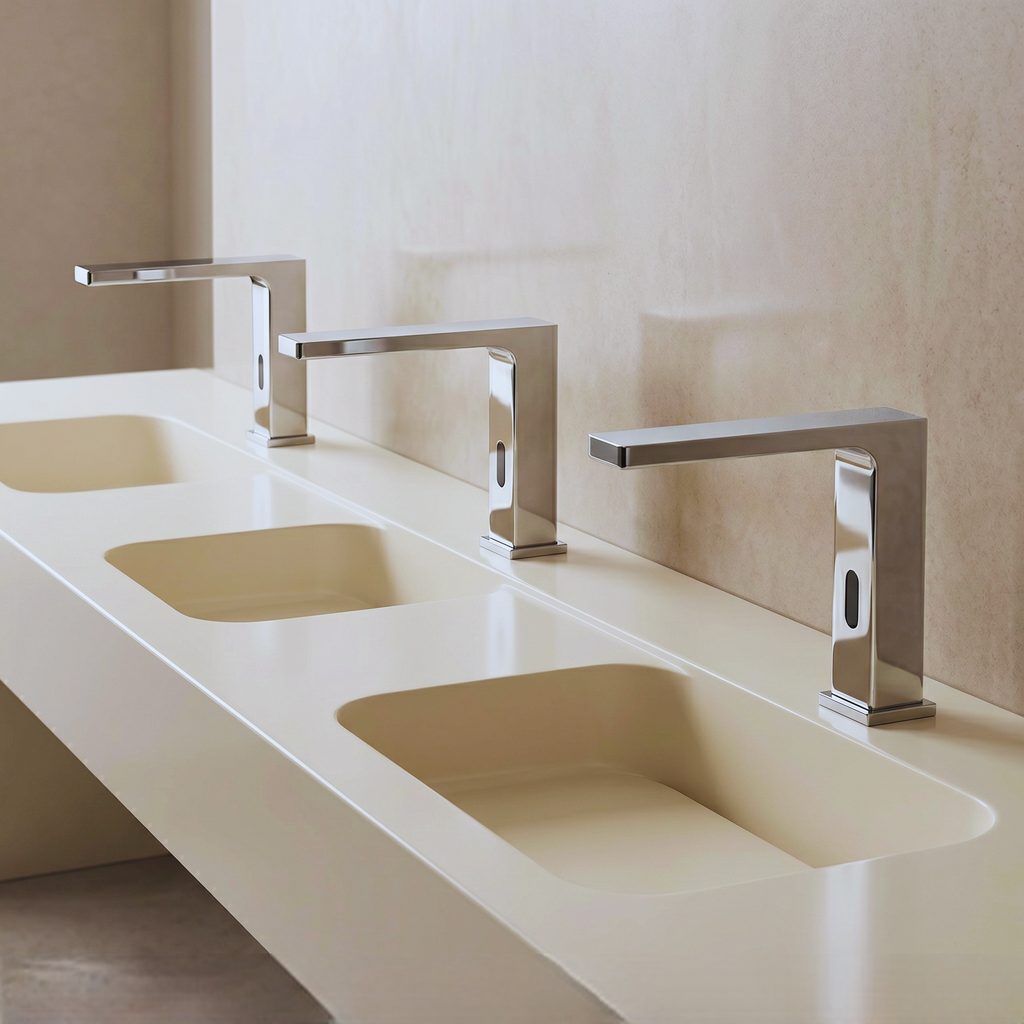
The faucets that are operated by sensors introduce more complexity. While sensors are not required by code, they are still required to meet operability and performance expectations once installed.
- Detection zones aligned with natural hand positions
- Minimization of false activation and water waste
- Compatibility with reflective basins and backsplashes
- Consistent response across users
Early evaluation of sensor range, mounting location, and surrounding surfaces is essential to prevent nuisance activation or user confusion.
Coordinating Flow Rate, Height, and Sensor Logic
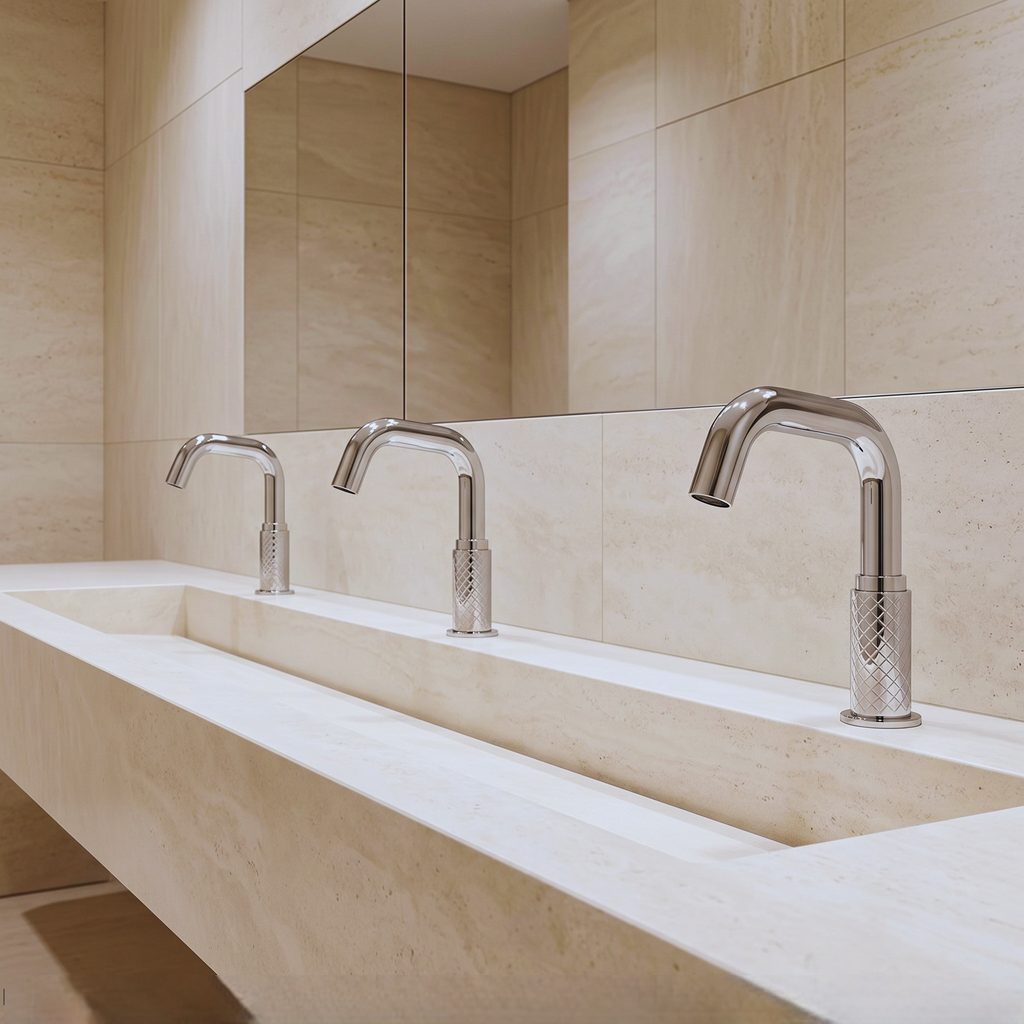
Although plumbing codes list flow rates, mounting heights, and operability separately, inspectors evaluate these factors together during field review. A compliant fluid flow rate does not offset unsuitable mounting, nor does correct height compensate for non reliable sensor behavior.
An impactful coordination can make sure that the water lands close to the drain, sensors activate within innate hand positions, and users operate fixtures with less effort. With this approach, compliance becomes functional instead of merely documented.
Material Durability and Ongoing Compliance
The compliance depends upon durability in the long run. Fixtures that degrade prematurely may drift out of compliance due to leaks, inconsistent activation, or finish failure under frequent cleaning.
- Lead-free brass or stainless-steel construction
- Sealed electronic components in sensor faucets
- High-cycle cartridges and solenoid valves
- Finishes compatible with institutional cleaning protocols
Documentation and Inspection Readiness
Compliance needs to be verifiable during inspection and throughout the fixture’s service life. A clean documentation supports both inspectors and facility managers.
- Cut sheets stating flow rates and compliance standards
- Installation instructions matching tested configurations
- Sensor calibration and maintenance guidance
- Documentation supporting long-term operability
Reviewing Commercial Faucet Categories in Context
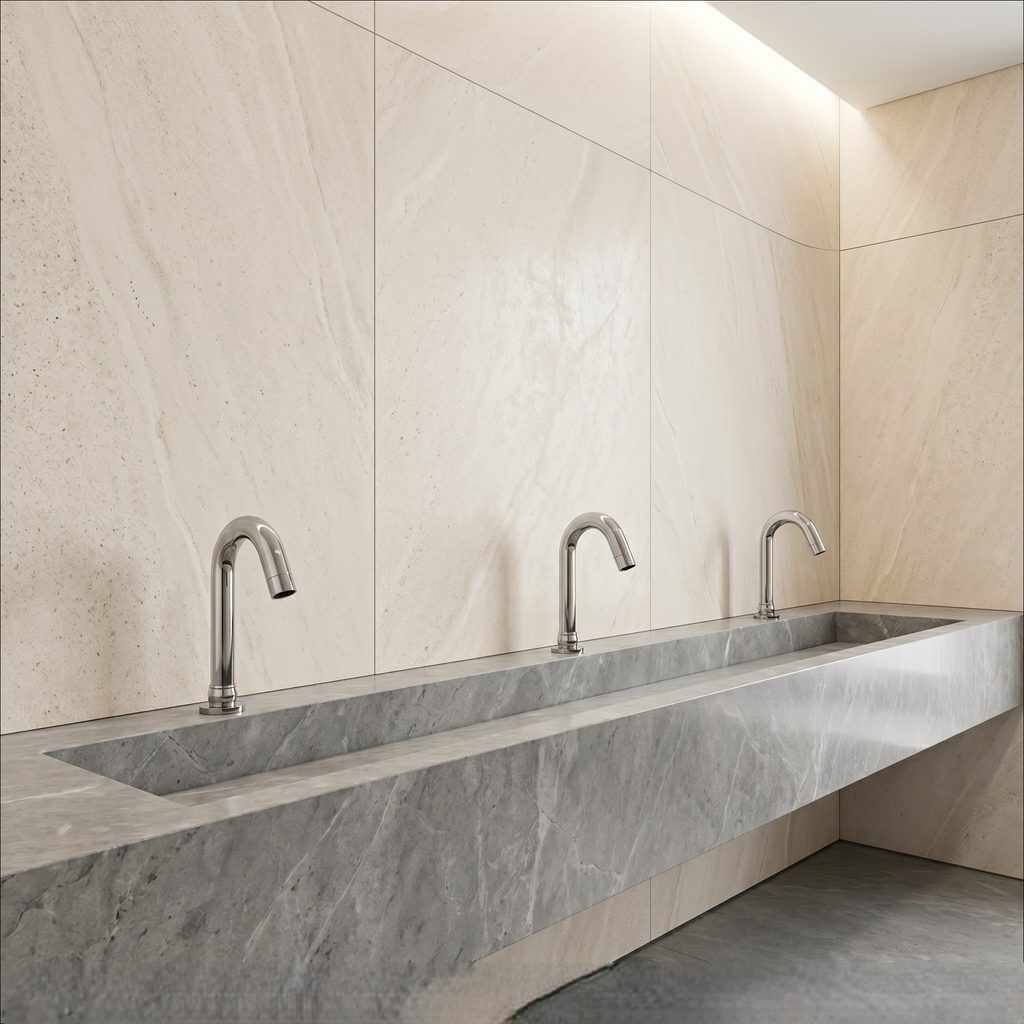
The reviewing of diverse commercial faucet categories helps specifiers understand how various systems resolve flow control, mounting geometry, and sensor integration.
Fontana Glacier Series Product Collection

Fontana Glacier Series™ – Curved Glass & Marble Edition

Fontana Glacier Series™ – Chrome Edition

Fontana Glacier Series™ – Chrome & Marble Edition

Fontana Glacier Series™ – Aqua-Tinted Glass & Chrome Accents

Fontana Glacier Series™ – Glass Chrome & Marble Edition

Fontana Glacier Series™ – Duo Edition

Fontana Glacier Series™ – Touchless LuxeFusion

Fontana Glacier Series™ – Glass and Engineered Marble

Fontana Glacier Series™ – Architectural Duo

Fontana Glacier Series™ – Aqua Class and Marble Edition

Fontana Glacier Series™ – Aqua Cylindrical Edition

Fontana Glacier Series™ – Touchless Combo

Fontana Glacier Series™ – Aqua Crystal With Marble

Fontana Glacier Series™ – Marble Stone Edition
Conclusion
Building code compliance for commercial faucets extends beyond individual requirements. The fluid flow rates, mounting heights, and sensor placement all of them functions jointly to introduce fixtures that stay accessible, efficient, and also reliable under real-world situations.
Through approaching compliance as a means of coordinated design and installation effort, AEC experts reduce inspection risk, improve user experience, and support facility performance in the long run. This systems-based perspective reflects the true essence of commercialtoiletfaucets.com: that provides technically grounded guidance for compliant, durable commercial toilet designs.