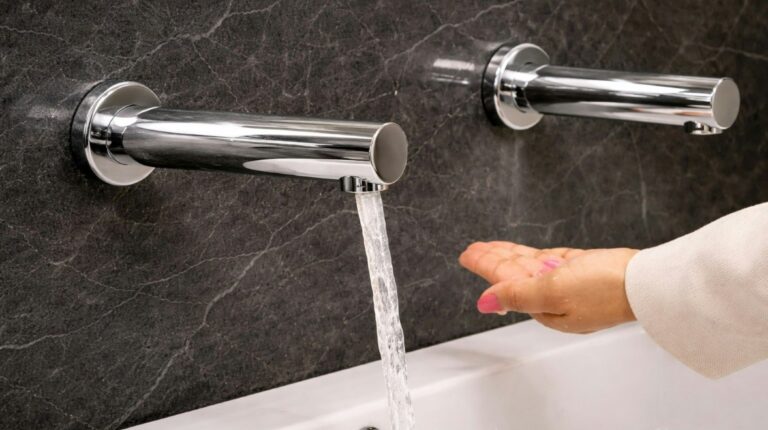
The Role of Touchless Fittings in Contemporary Building Programs
For commercial and institutional restrooms, touchless faucets, flush valves, and soap dispensers are no longer optional upgrades but expected elements in the design. They are integral components of accessibility, infection control, and water-use strategies written directly into owner standards and jurisdictional codes.
- ADA reach, clearances, and operability criteria
- Water efficiency benchmarks such as WaterSense and CALGreen
Treating these devices as systems rather than isolated fixtures is key to avoiding coordination conflicts during design and commissioning.
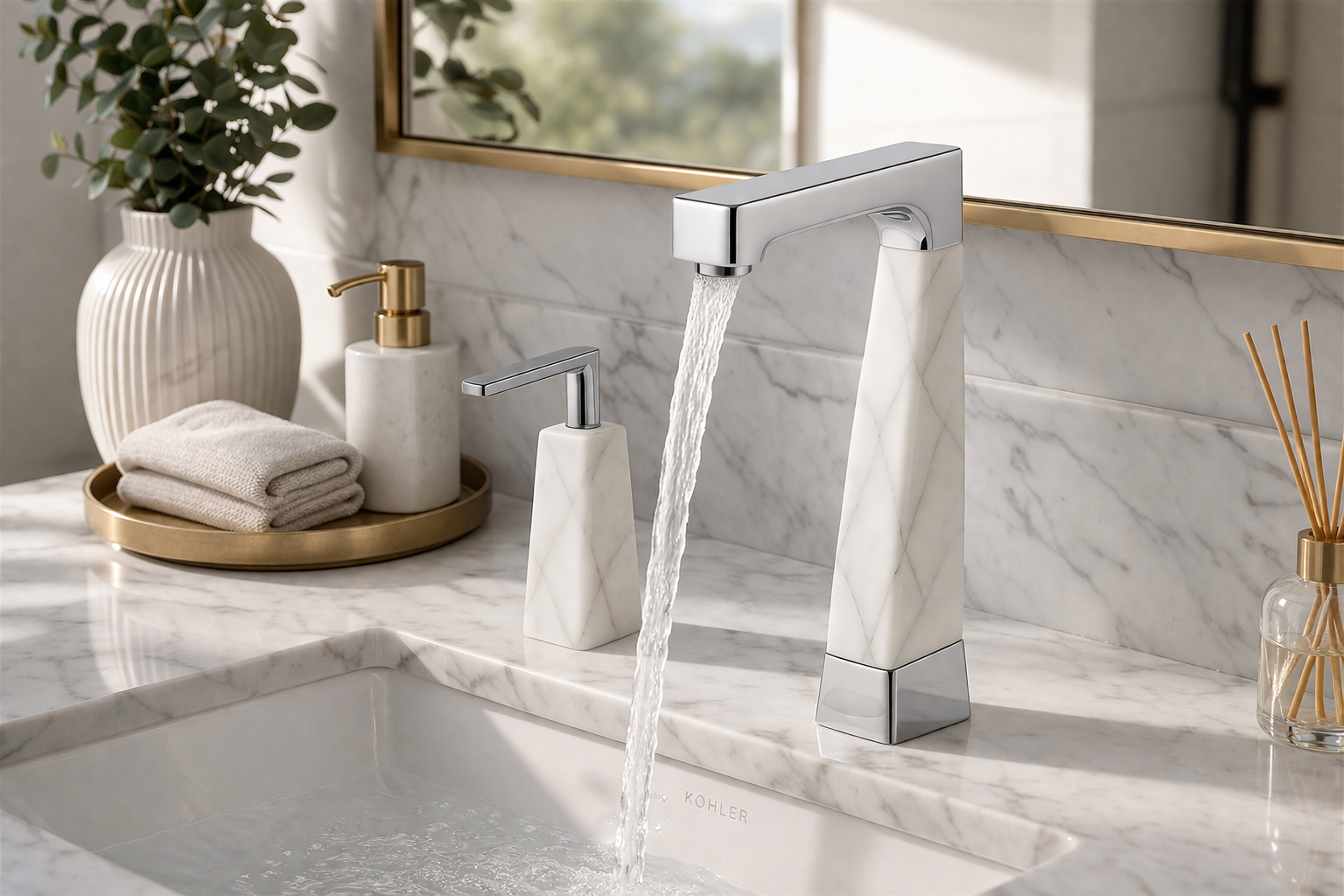
ADA Considerations for Touchless Restroom Fittings
Reach Ranges and Sensor Placement
ADA accessibility includes sensor usability and placement within reach ranges. For wall-mounted systems:
- Forward reach should fall within 15–48 inches above finished floor
- Sensors and controls must not require tight grasping or twisting
Activation Characteristics and Timing
- Adjustable run-times to support proper hand washing
- Fail-safe operation during power loss
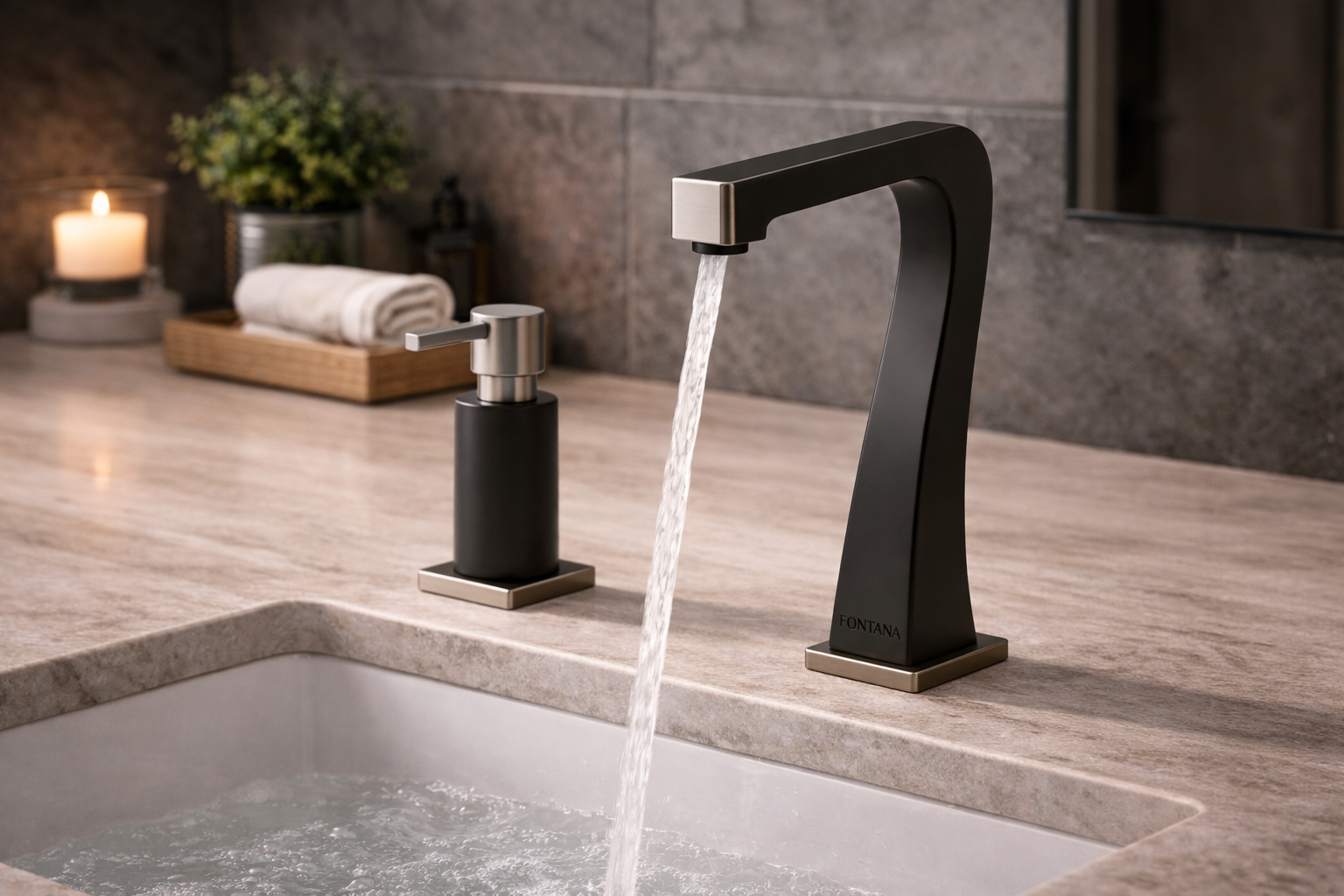
Hydraulic Performance and Compliance
Flow Rates and Mixing
- Ensure proper pressure at the fixture for performance
- Coordinate mixing valves for safe outlet temperatures
- Understand system behavior under low pressure conditions
Standards
- ASME A112.18.1 / CSA B125.1 compliance
- Verify local requirements and backflow protection
Water Efficiency and Green Code Alignment
WaterSense-Level Control
- Typical flow rates: 0.35–0.5 gpm
- Runtime calibration supports hygiene and conservation
- Specify flow performance clearly in schedules
CALGreen Alignment
- Automatic shut-off via sensors
- Configurable time-out settings
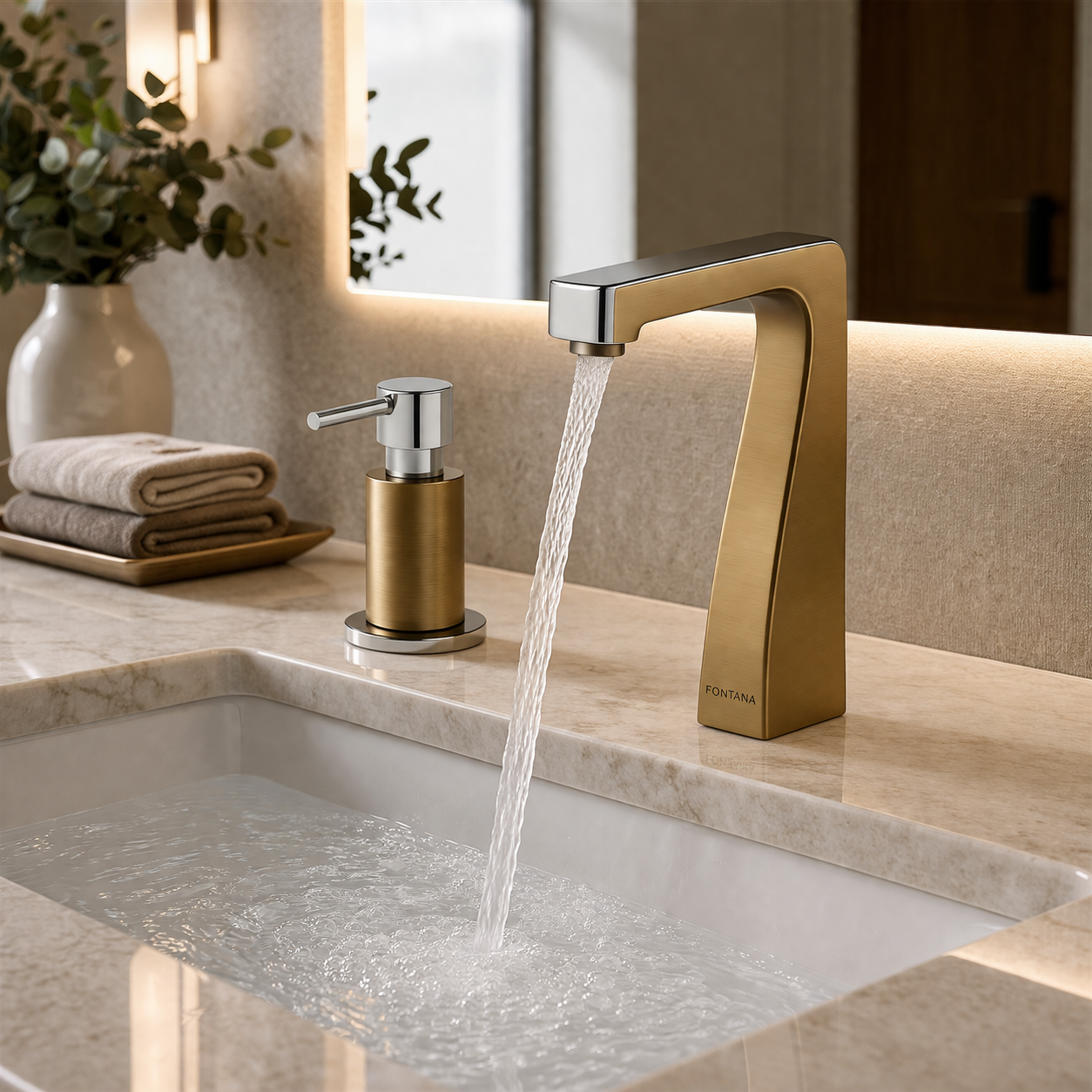
Durability and Life-Cycle Considerations
Material and Resistance
- Solid brass vs plastic construction
- Vandal-resistant features
- Protection for electronics in wet environments
Maintainability
Standardized components and proper training reduce long-term maintenance challenges.
Power Strategies and Integration
- Battery systems simplify installation but require maintenance planning
- Low-voltage systems allow centralized control and integration
Smart Integration
- Usage tracking
- Fault alerts
- Zone control
Coordination with Architecture and Design
Geometry and Usability
- Match spout reach with basin size
- Maintain ADA clearances
Visual Integration
- Avoid finishes that affect sensors
- Ensure accessibility for maintenance
Specification Recommendations
Standards
- Applicable plumbing codes
- Water efficiency alignment
Performance
Define flow rates, sensor behavior, materials, and power requirements clearly.
Commissioning
Include testing, configuration responsibilities, and integration validation.

Why Touchless Solutions Continue to Gain Ground
Touchless restroom fittings support modern expectations for hygiene, accessibility, and operational efficiency in commercial environments.
- Improved user experience in high-traffic spaces
- Reduced water waste and controlled usage
- Alignment with contemporary building standards
These systems contribute to cleaner, more reliable, and more consistent restroom environments across a wide range of building types.