
Fontana’s ADA-Compliant Touchless Solutions for Modern Building Design
As fast as commercial and public infrastructure is expanding these days, accessibility and sanitation are no longer just a good idea—they’re required by law and insisted upon by the public. Where this is more apparent than anywhere is in the growing demand for ADA-compliant, touchless building solutions.
Fontana, a trusted manufacturer of plumbing and sanitary ware products, has become a major player with innovative ADA-compliant touchless products that satisfy accessibility requirements as well as the demand for a cleaner environment. As a building planner, architect, or facilities manager, it’s vital to learn about these products in order to design modern, accessible, and visionary spaces.
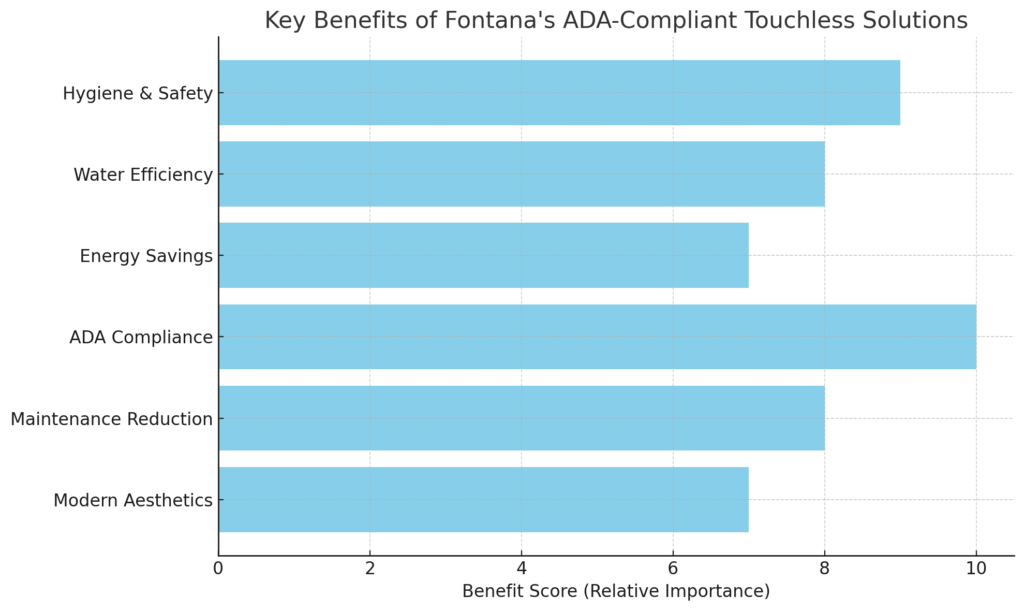
Understanding ADA Compliance: Beyond the Basics
Americans with Disabilities Act (ADA) is a set of legal specifications to enable buildings and facilities to be accessible to the disabled. ADA accessibility, in the case of restrooms, lobbies, and public spaces, is often attained by incorporating measures such as:
- Accessible controls and fixtures operated typically using one hand without twisting or squeezing
- Accurate mounting heights for equipment
- Sufficient floor area for wheelchair usage
- Forces to activate that do not exceed five pounds
- For planners, ADA compliance is a matter of law—but going beyond requirements enhances user satisfaction and future-proofs the design
Why Touchless Solutions Matter in 2026 and Beyond
The COVID-19 pandemic forever transformed our understanding of cleanliness in public areas. Faucet handles, soap dispensers, flush valves, and door handles are all touch points that act as vectors for germs across shared environments, resulting in high demand for touchless solutions.
Touchless solutions are now being adopted by building designers into general hygiene practice. The systems offer:
- Improved sanitation through the removal of bodily contact
- Less maintenance due to fewer clogs and breakages
- Water efficiency through sensors that control usage
- Modern aesthetics that improve user experience
Fontana’s touchless ADA-compliant products unite hygiene and accessibility goals so planners don’t have to choose one over the other.
Fontana’s ADA-Compliant Touchless Product Portfolio
Fontana offers a full line of ADA-compliant touchless solutions that meet functionality with aesthetic architectural beauty. Some of the finest categories include:
1. Touchless Faucets
Fontana touchless faucets are designed with ADA and universal design in mind. The most notable features include:
- Operation using an infrared sensor
- Sensor range and temperature adjustments
- Battery and hardwired options
- Low-profile design with wheelchair clearance
The faucets don’t only meet code but also conserve water by shutting off automatically when not in use.
2. Sensor-Operated Soap Dispensers
Placed alongside touchless faucets, Fontana’s ADA soap dispensers provide continuity in hygiene. The dispensers include:
- Refill cartridges or remote refill systems for heavy-traffic locations
- Hands-free infrared sensing
- Easy to install at ADA heights
- Coordinate with Fontana’s faucet finishes for a seamless look in modern design schemes
3. Automatic Flush Valves
Toilet and urinal flush valves that are both ADA and water-conserving compliant are available from Fontana. The valves:
- Have manual override in case of power failure
- Are mounted in a way to meet the reach range requirement
- Provide sanitary restroom conditions without user contact
4. Touchless Hand Dryers and Accessories
Fontana also includes ADA-acceptable hand dryers and bathroom accessories such as paper towel dispensers, waste receptacles, and mirrors—all of which are made for correct reach, height, and accessibility.
Hand dryers are energy efficient and produce minimal noise, a welcome feature in inclusive environments.
Planning Considerations for Implementation
In incorporating Fontana’s touchless ADA-acceptable solutions, planners should note the following:
Space Planning
Create unobstructed floor space beneath fixtures, especially under counters and sinks, to allow for wheelchair use. Mounting heights and the detection area of sensors should also be within ADA-specified ranges.
Power Supply and Infrastructure
The majority of touchless units require electric or battery power. Pre-design electrical planning allows for seamless integration and avoids retrofitting costs. Fontana has plug-in and battery options available for increased flexibility.
Maintenance and Refill Protocols
Touchless systems require ongoing calibration, sensor service, and supply replacement. Fontana supports planners and facilities personnel with user documentation, training aids, and durable, low-maintenance products that reduce downtime.
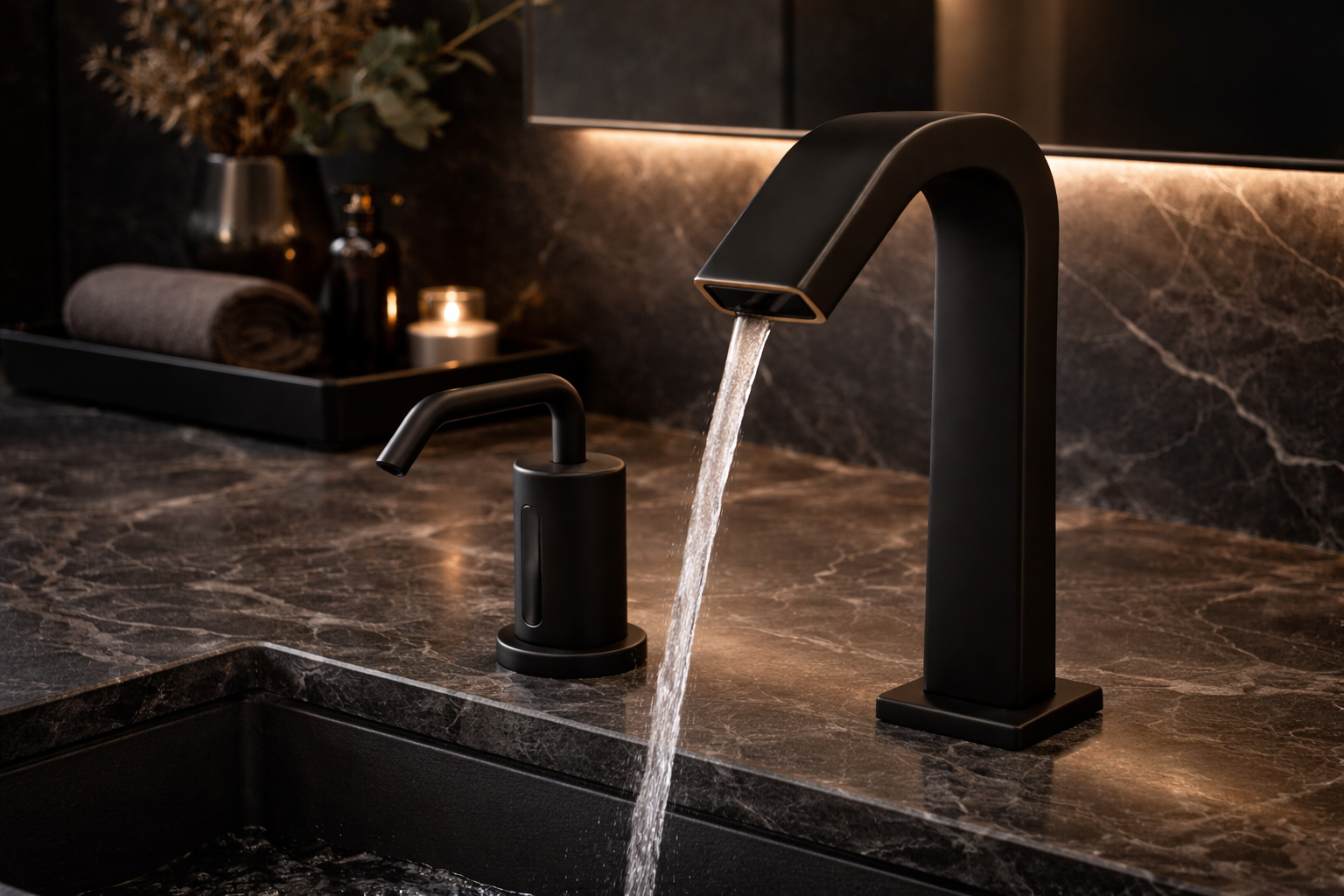
Aesthetics and Branding
Fontana products are available in a range of finishes—chrome, brushed nickel, matte black, gold—that can work in sync with brand palettes or architectural aesthetics.
Sustainability and Cost Efficiency
Touchless does not necessarily mean cleaner; it more often means greener. Fontana solutions are created with sustainability in mind:
- Water Conservation: Up to 70% water wastage is saved by flush valves and sensor faucets
- Energy Efficiency: Low energy consumption components in dryers and sensors
- Long-Term Savings: Minimum maintenance and water usage sum up to reduced operational costs
- Saving LEED-related value and strengthening public-facing building standards through smarter fixture selection
Where ADA-Compliant Touchless Fixtures Deliver the Most Value
Beyond meeting accessibility requirements, touchless restroom fixtures help create cleaner, more efficient spaces in high-traffic environments. For architects, facility managers, and commercial planners, selecting ADA-compliant solutions can improve user comfort while supporting long-term maintenance and water-saving goals.
Ideal for High-Traffic Commercial Spaces
Touchless ADA-compliant faucets, soap dispensers, and flush systems are especially valuable in places where sanitation and accessibility must work together every day.
- Office buildings and corporate campuses
- Hospitals, clinics, and wellness facilities
- Schools, universities, and public institutions
- Airports, hotels, malls, and retail spaces
Why Designers Choose Touchless Systems
A well-designed touchless restroom does more than look modern. It supports accessibility, promotes hygiene, and helps simplify upkeep for busy facilities.
- Supports cleaner restroom environments
- Helps reduce unnecessary water use
- Improves convenience for a wide range of users
- Blends easily with contemporary commercial design
Conclusion: Designing for the Future
It’s an easy job for today’s building designers: create spaces that are accessible, sanitary, and visionary. Fontana touchless ADA-compliant solutions aren’t a response to the next big thing—they’re an investment in user health, compliance with regulations, and operational efficiency.
By integrating these solutions into your design plan, you’re not only meeting legal mandates—you’re also improving the experience for every visitor who walks through your building.
No matter if you are building a hospital, school, airport, retail setting, or corporate campus, Fontana is equipped to help you build confidently, inclusively, and creatively.
For product information and architectural consultation, visit FontanaShowers.com.
Quick Summary
| Category | Key Details |
|---|---|
| Purpose | ADA-compliant, touchless solutions for hygiene and accessibility |
| Why It Matters | Enhances sanitation, reduces maintenance, saves water, and helps future-proof buildings |
| Main Products | Touchless faucets, soap dispensers, flush valves, and hand dryers |
| ADA Features | One-hand use, low mounting height, clear floor space, and sensor activation |
| Benefits | Hygiene, safety, water efficiency, energy savings, and modern aesthetics |
| Design Options | Chrome, brushed nickel, matte black, and gold finishes |
| Applications | Public restrooms in schools, hospitals, airports, offices, retail, and other commercial spaces |
| Planner Tips | Plan for power access, ADA dimensions, sensor calibration, and refill access |
Featured Video
Build Smarter, Cleaner, and More Accessible Spaces
Fontana’s ADA-compliant touchless solutions bring together accessibility, sanitation, and modern design in one complete approach. For commercial restroom planning, these fixtures help create spaces that are more efficient, user-friendly, and aligned with current expectations.
This version keeps the full right-side image visible, preserves the card-based layout, and remains clean and publish-ready.