Cost & Hygiene Comparison
Touchless commercial faucets and traditional manual faucets are compared here side by side, with a focus on hygiene, water and energy cost, maintenance requirements, total cost of ownership, and real-world performance in commercial environments.
1. Executive Summary
Touchless commercial faucets are contrasted with traditional manual faucets in a practical comparison based on:
- Hygiene risk
- Water and energy cost
- Maintenance needs
- Total cost of ownership
- Real-life tests and video demonstrations
2. Hygiene Impact
Manual Faucet Risks
- Direct contact can increase the chance of germ transmission.
- Public faucet handles are commonly recognized as high-touch surfaces in shared facilities.
Touchless Faucet Benefits
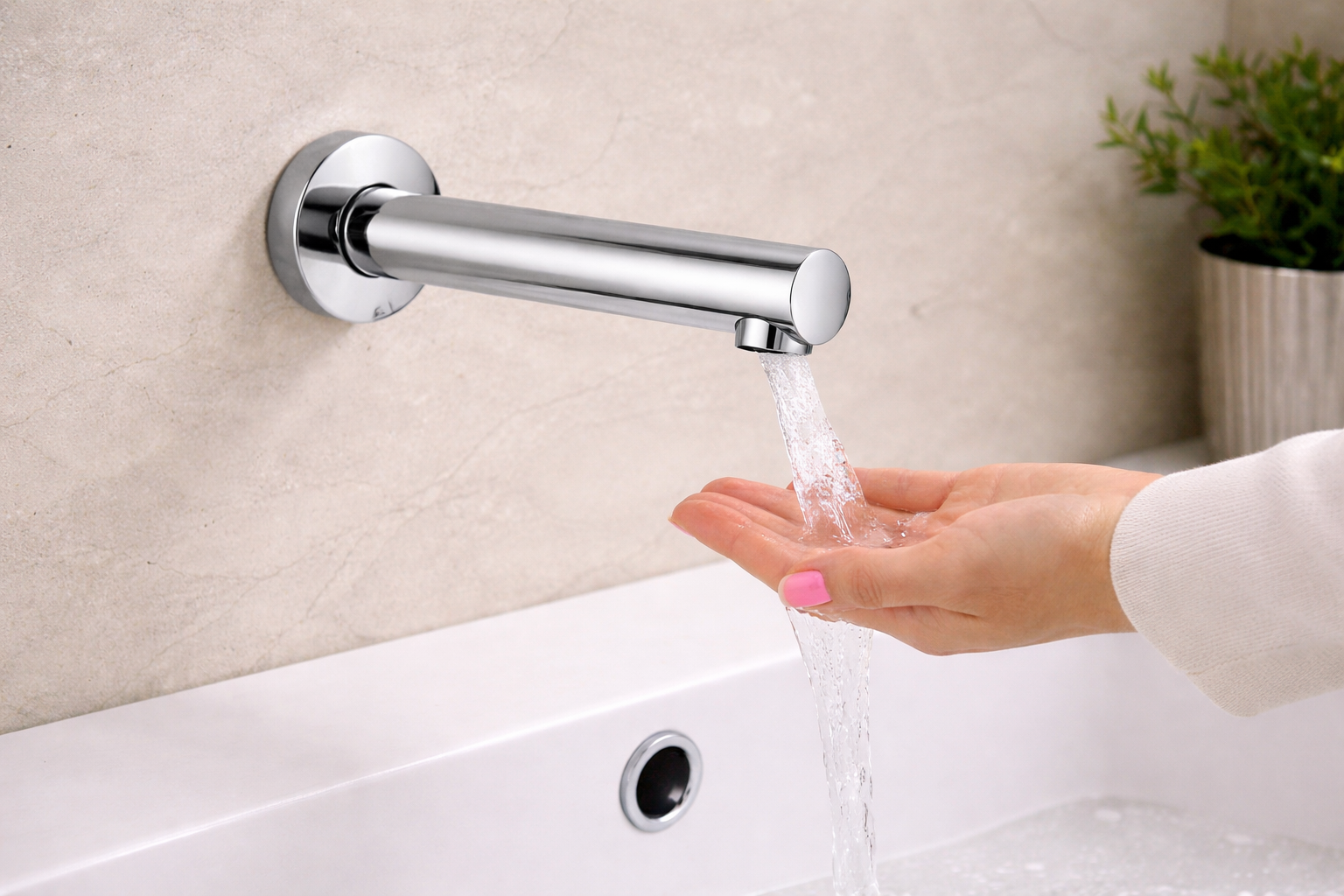
- Reduces contact with shared surfaces.
- Supports improved hand hygiene practices.
- Commonly used in high-traffic and high-risk environments such as healthcare facilities and airports.
3. Water & Energy Efficiency
Comparative Usage
| Fixture Type | Flow Rate | Usage per Wash | Water Savings |
|---|---|---|---|
| Manual | 1.5–2.2 GPM | ~2.0 L | — |
| Touchless | 0.35–0.5 GPM | 1.0–1.2 L | 35–60% |
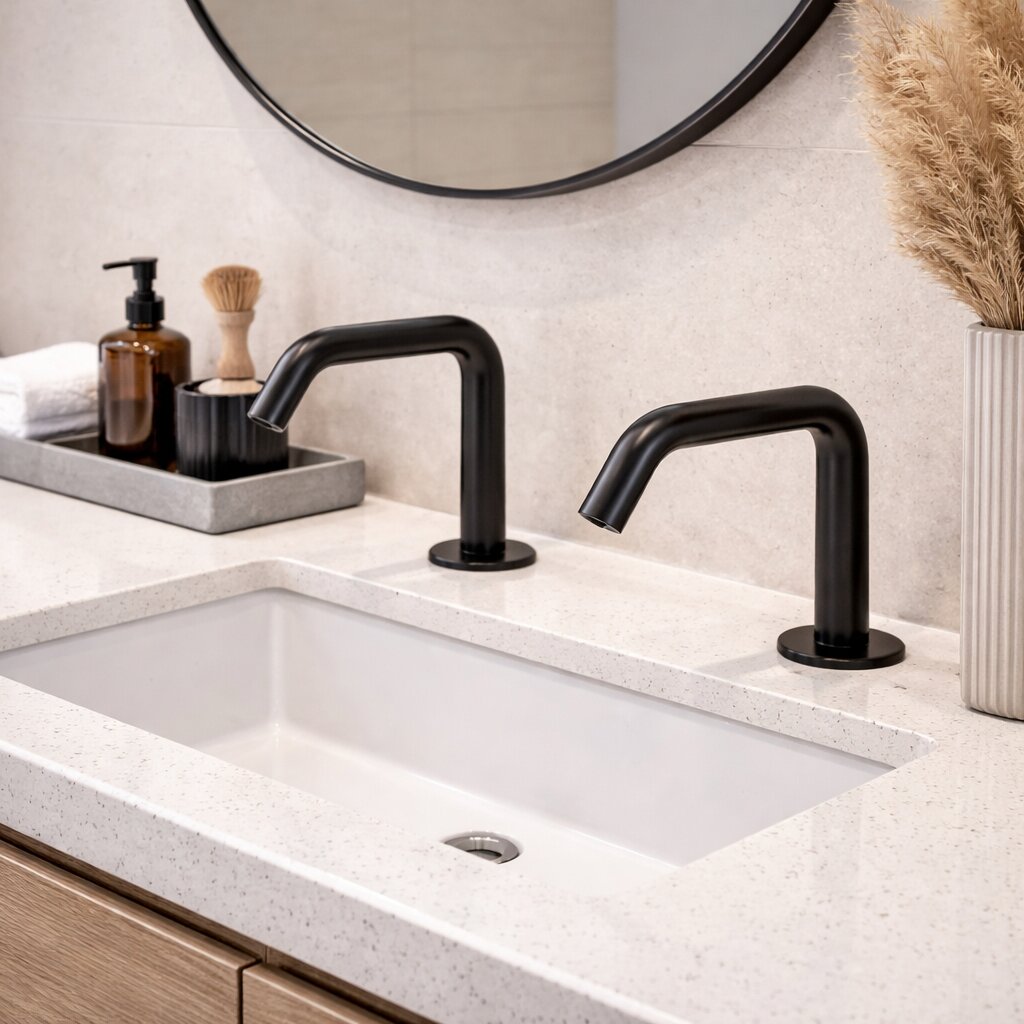
- Auto-stop sensors help prevent unnecessary water flow.
- Case studies cited in the original post report measurable savings in commercial buildings.
Energy Conservation
- Reduced hot water flow can also reduce water heating demand.
- Lower hot water consumption may support lower operating costs in high-use facilities.
4. Installation & Maintenance
Manual Faucet Disadvantages
- Handles and moving parts can wear over time.
- Leaks, loose handles, and more frequent replacements are common issues in high-use areas.
Touchless Faucet Advantages
- No handles to crack or loosen with repeated use.
- Many models use durable brass construction.
- Battery-powered and hardwired configurations are available.
- Auto-shutoff functionality helps prevent extended water flow.
5. Cost Analysis: 3-Year TCO
| Cost Category | Manual Tap | Touchless Faucet |
|---|---|---|
| Upfront Cost | $75–$120 | $190–$400 |
| Annual Maintenance | $80–$120 | $20–$50 |
| Water & Energy Cost | $90–$150 | $35–$75 |
| 3-Year Total | ~$555 | ~$390 |
Touchless systems can offset a higher initial investment with lower ongoing costs over time, especially in commercial settings where fixtures are used frequently.
6. Industry Benchmark Studies
- Case studies referenced in the post highlight water savings, reduced maintenance needs, and improved user satisfaction in commercial spaces.
- Reported savings are strongest where restroom usage is high and waste reduction is a priority.
7. Real-World Feedback
- Users commonly associate touchless systems with improved hygiene perception.
- Facilities often value the added sense of control and consistency in operation.
- Maintenance teams may benefit from reduced wear associated with manual handling.
For more detailed statistics:
8. Video Highlight
This demonstration highlights a sensor faucet and hand dryer combination designed to reduce touch points, support cleaner restroom use, and improve space efficiency.
9. Summary Comparison
| Feature | Manual Faucet | Touchless Faucet |
|---|---|---|
| Hygiene | Lower | Higher |
| Water Use | Higher | Lower |
| Energy Consumption | Higher | Lower |
| Maintenance Effort | Higher | Lower |
| Upfront Cost | Lower | Higher |
| 3-Year Total Cost | Higher | Lower |
| LEED Potential | Limited | May support efficiency-focused projects |
Best for Hygiene
Touchless faucets reduce contact with shared surfaces in busy commercial restrooms.
Best for Upfront Budget
Manual faucets usually cost less at the time of purchase and installation.
Best for Long-Term Value
Touchless faucets can offer stronger long-term savings in high-traffic spaces.
10. Recommendations
- Install touchless faucets in high-use areas such as restrooms, foodservice spaces, and healthcare environments.
- Select models with lower flow rates where water savings are a priority.
- Pair touchless faucets with touchless soap dispensers for a more complete hygiene solution.
- Track maintenance and water usage to evaluate long-term return on investment.