Architectural Plumbing Design: Specifying Toilet Faucets in Commercial Restrooms
Toilet Faucets Within the Architectural Plumbing System

In commercial restrooms, toilet-area faucets function as part of an integrated plumbing and architectural system. They must work with water closets, lavatories, partitions, accessibility clearances, hygiene planning, and service access.
- Water closets and restroom partitions
- Accessible lavatories and clearance zones
- Hygiene and infection-control strategies
- Facilities maintenance and lifecycle planning
Unlike residential fixtures, commercial faucets are expected to perform under repeated daily use, resist misuse, and remain compliant over long service periods.
Code and Standards
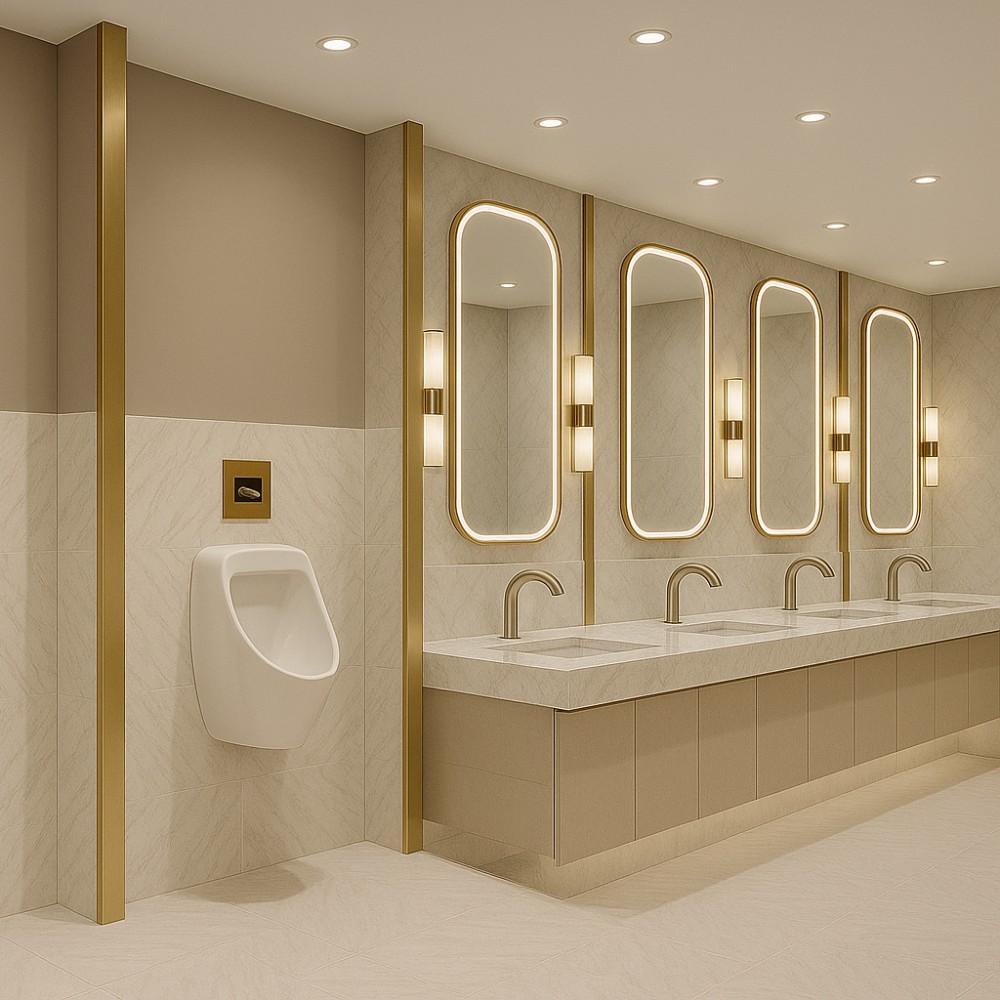
Commercial toilet faucets should align with applicable standards and local code requirements.
- ASME A112.18.1 / CSA B125.1
- NSF/ANSI/CAN 61 and NSF/ANSI 372
- ADA Standards and ICC A117.1
- Local plumbing and health code requirements
Faucet Control Types in Commercial Restrooms

Commercial toilet-area lavatories commonly use these control options:
- Touchless sensor faucets for improved hygiene
- Metering faucets to reduce unnecessary water use
- Manual lever-handle faucets where accessibility requirements are met
Touchless options are widely specified in healthcare, education, government, and other high-traffic restroom settings because they reduce contact points and support easier operation.
Spout Geometry and Lavatory Coordination
Faucet spout design directly affects user comfort, splash control, and sink performance. Proper coordination between the spout and basin helps the water stream land where it should without creating excess mess or maintenance issues.
- Spout reach should direct flow into the basin
- Spout height should allow hand clearance without overspray
- Bowl shape and sink depth should support efficient handwashing
- Accessible lavatories should maintain required clearances
Poor coordination between faucet geometry and lavatory design can lead to splash, discomfort, and avoidable service complaints.
Mounting Configuration and Maintenance Access
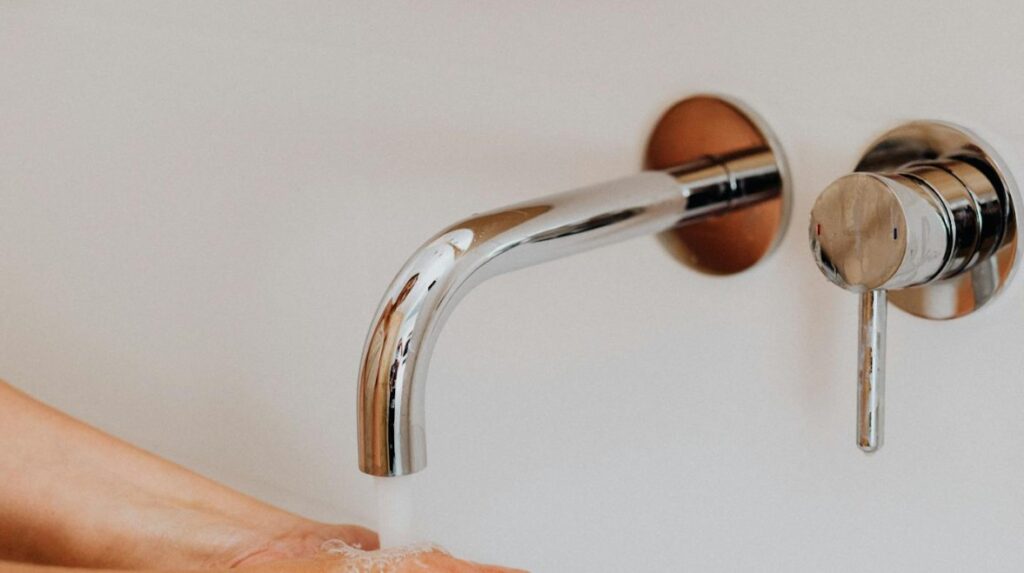
Most commercial toilet faucets are deck-mounted, while wall-mounted options may be selected where easier surface cleaning or specific project conditions make them a better fit.
- Deck-mounted faucets suit many retrofit and standard countertop projects
- Wall-mounted faucets can simplify cleaning and reduce deck penetrations
- Maintenance access should be considered early in design
Material and Durability
Heavy use, regular cleaning, and public environments make durability one of the most important specification factors.
- Lead-free brass or stainless steel bodies
- Reliable ceramic disc or solenoid operation
- Seals designed for repeated use
- Finishes suitable for routine cleaning
Water Efficiency
Water-efficient faucets help reduce consumption while supporting sustainability goals and ongoing facility cost control.
- Commercial-appropriate flow rates
- Metered or timed shutoff where needed
- Compatibility with efficiency programs
- Balanced performance for effective handwashing
Documentation and Coordination
Product data should be easy to review during design and submittal. Good documentation improves coordination between architectural, plumbing, and facility teams.
- Product cut sheets
- BIM or Revit files
- Installation instructions
- Operation and maintenance details
Specification Priorities for High-Traffic Commercial Restrooms
When selecting toilet faucets for public and institutional restrooms, it helps to keep the decision focused on performance first. A good commercial faucet should be easy to operate, simple to maintain, and durable enough for repeated daily use. It should also support the sink design, help control splash, and fit the cleaning standards of the facility.
For many projects, the best results come from reviewing faucet type, mounting style, spout geometry, service access, and compliance documentation together rather than as separate items. That approach makes specification more consistent and reduces coordination issues later in the project.
| Specification Area | What to Check | Why It Matters |
|---|---|---|
| Control Type | Touchless, metering, or manual operation | Impacts hygiene, user experience, and water use |
| Spout Design | Reach, height, and basin alignment | Helps reduce splash and improves usability |
| Mounting Style | Deck-mounted or wall-mounted | Affects installation, cleaning, and service access |
| Materials | Lead-free brass, stainless steel, durable internals | Supports long-term performance in public restrooms |
| Compliance | ADA, NSF, ASME, local code alignment | Reduces approval and inspection issues |
Fontana Axis Tower Duo Product Variants
The Fontana Axis Tower Duo line includes multiple finish and style variations designed for commercial washroom applications. Below is a clean product section that lists the product name, image, and direct product link in the same layout.


Quick Product Links
Conclusion
Specifying toilet faucets in commercial restrooms requires a practical balance of code compliance, hygiene, durability, maintenance access, and water efficiency. The right selection supports both day-to-day facility performance and long-term project value.
A system-based approach helps ensure that the faucet works with the lavatory, the restroom layout, and the operational needs of the building. For architects, designers, and specifiers, that makes the selection process more reliable and more effective.