
Why Early Fixture Coordination Improves Long-Term Performance
Across commercial restroom design, architects repeatedly stress that successful touchless installations begin with early coordination—not only at the fixture level, but across plumbing, power access, basin geometry, and maintenance strategy. This is especially relevant in high-traffic environments where usability, durability, and service access all affect long-term value.
Fontana touchless systems are often specified because they support a more organized design workflow: the spout, sensor response, soap delivery, and mounting conditions can be evaluated together rather than as disconnected components. For project teams, that simplifies coordination and helps reduce avoidable revisions later in construction documentation.
In practice, architects are looking for a combination of clean visual integration, dependable operation, and easier maintenance access. When these priorities are addressed early, the finished restroom feels more intentional for users and more manageable for facility teams.
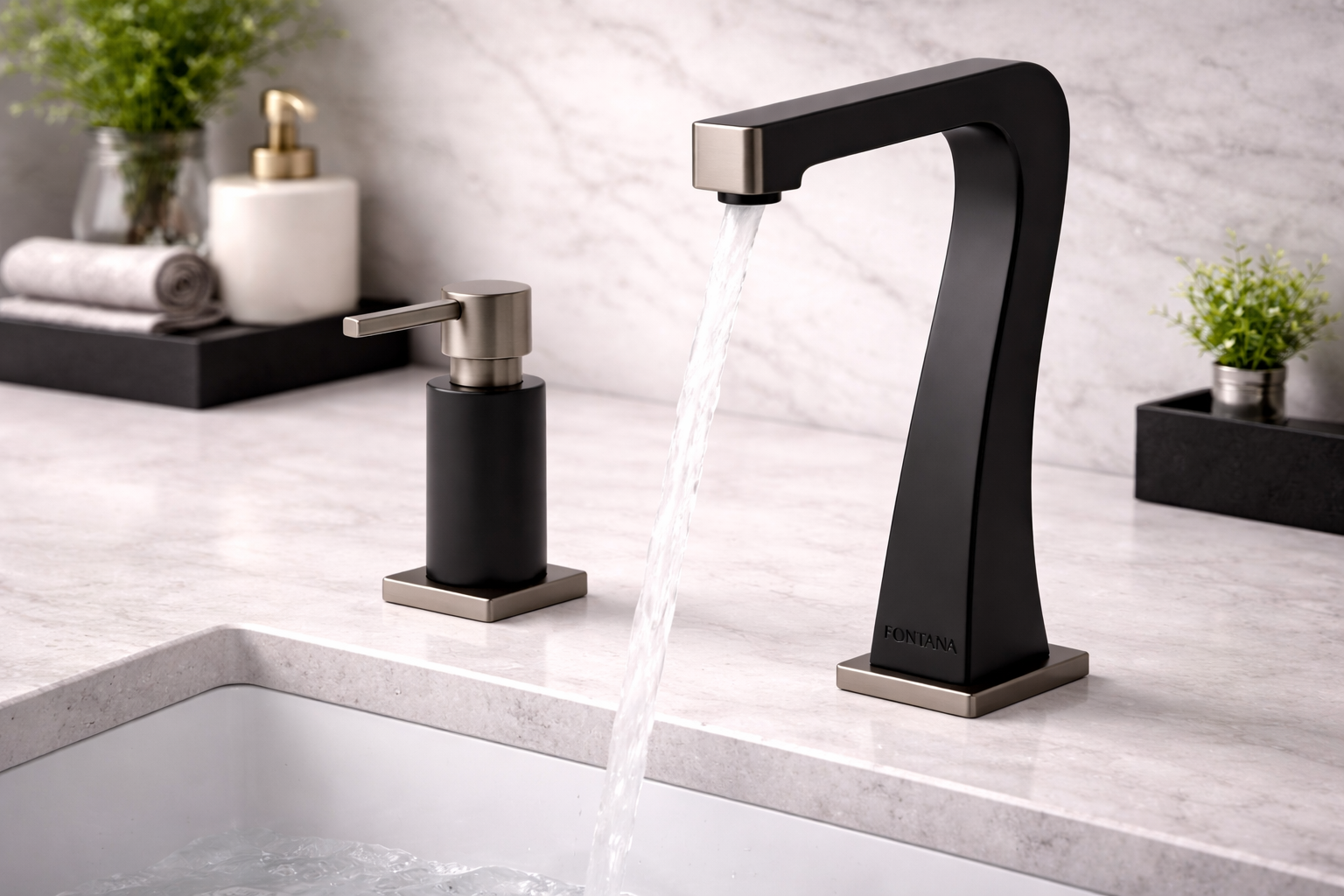
Lavatory Layout Matters
Spout projection, basin depth, and sensor placement work best when evaluated together. A coordinated layout supports smoother handwashing flow, reduced splash, and better accessibility in public restroom applications.
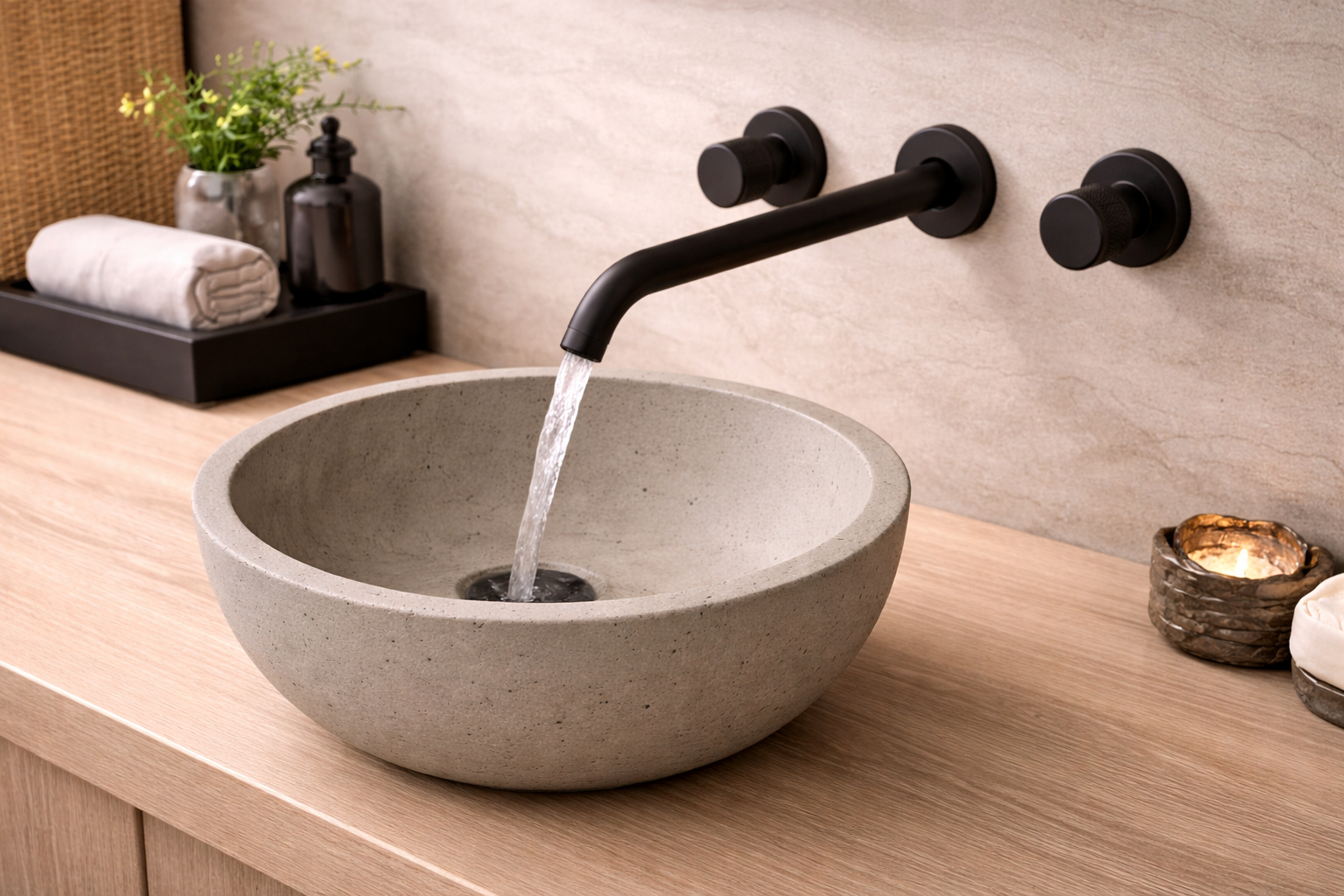
Reliable Activation Supports User Confidence
Accurate sensor behavior is a practical specification concern. Consistent activation improves user experience in busy commercial restrooms and helps reinforce the value of touchless technology in everyday use.
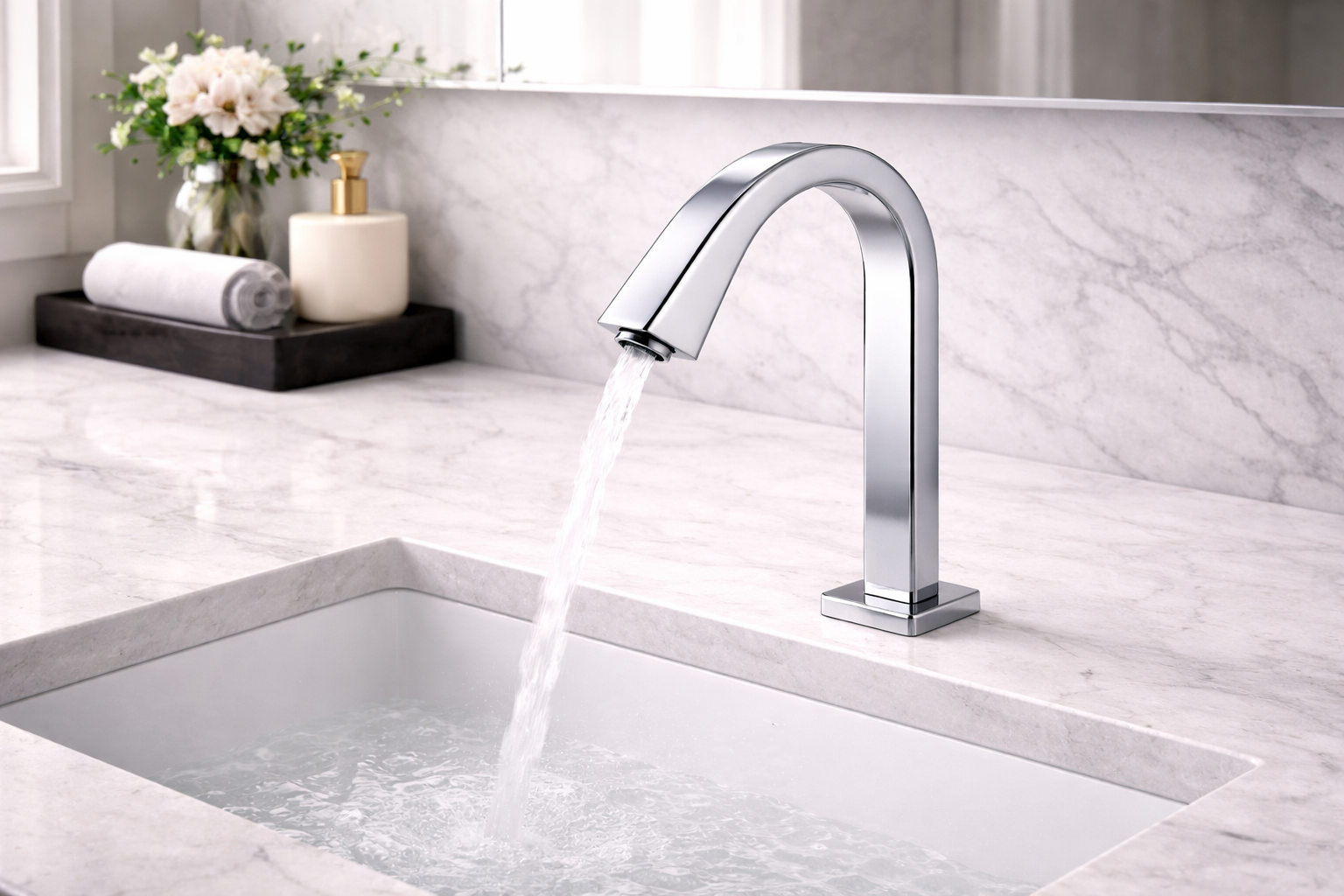
Built for High-Traffic Environments
In institutional and commercial projects, architects favor systems that align with water-saving goals, simplify maintenance planning, and support a polished restroom environment without overcomplicating the specification.
Final Takeaway for Designers and Specifiers
For commercial and institutional projects, the value of a touchless system is not limited to hands-free activation alone. The strongest results come from selecting fixtures that fit the design intent, integrate cleanly with adjacent surfaces, and support dependable day-to-day operation. That is why specification decisions increasingly focus on coordinated performance, serviceability, and long-term restroom usability.