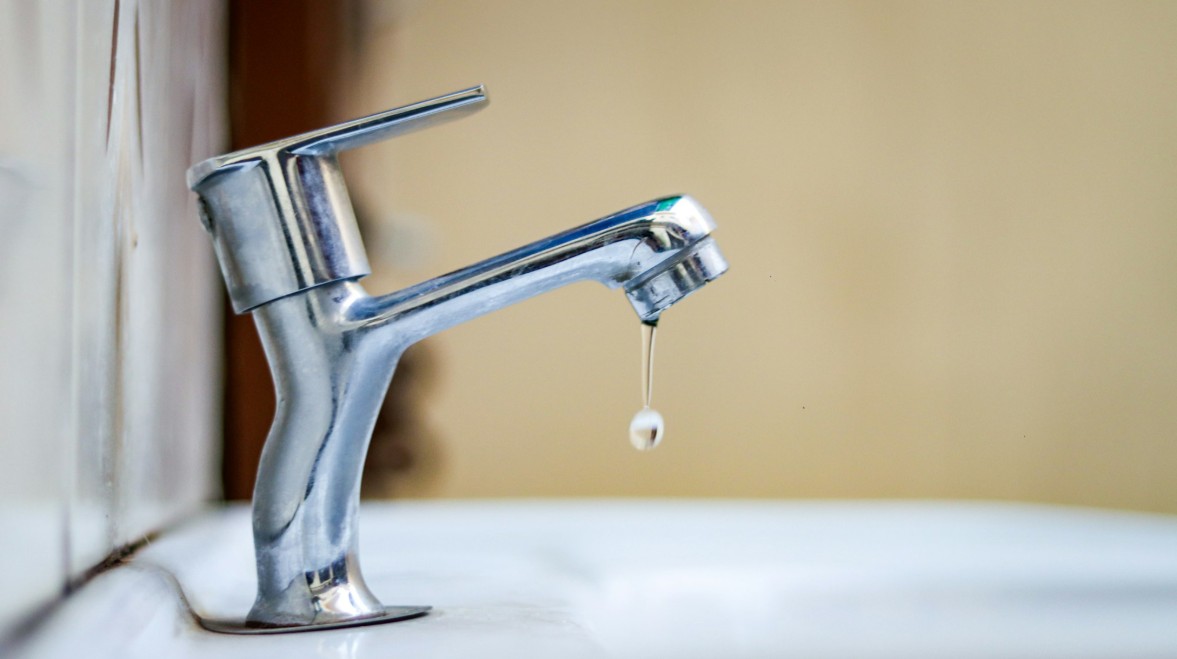
If you manage a building, you already know restroom water use adds up fast. Between handwashing, cleaning cycles, and the sheer volume of daily traffic, a faucet’s efficiency directly affects your operating costs and your sustainability goals. In this guide, we compare commercial (often touchless) toilet/lavatory faucets with standard manual fixtures, focusing on real-world water efficiency, total cost of ownership, and practical steps to analyze savings in your facility.
Why Faucet Efficiency Matters More Than You Think
Water savings in restrooms isn’t only about low-flow ratings. Two other variables determine actual consumption:
- Run-time control: How long the faucet flows during each use.
- User behavior: How consistently people shut off water while soaping or between tasks.
Manual handles rely on user discipline; touchless commercial faucets use sensors and internal timing to control flow. The result is that even at the same gallons-per-minute (GPM) rating, a commercial touchless faucet typically dispenses less water per handwash because it reduces unnecessary run time.
Flow Rates vs. Real-World Use
- Manual fixtures often range from 1.5–2.2 GPM in older stock, and 0.5–1.2 GPM for newer, aerated models. But if a user leaves the tap running while they soap up, the faucet flows continuously.
- Commercial electronic faucets frequently ship with 0.35–0.5 GPM laminar or aerated outlets (with options to adjust). More importantly, flow stops automatically between steps—wetting, soaping, rinsing—so water is only on when hands are present.
Key takeaway: The manual faucet using 0.5 GPM of water, in operation for soap-processing time of 20 seconds, consumes more water than the 0.5 GPM sensor faucet, which automatically turns off in the same period of 20 seconds.
Sources of Waste With Manual Fixtures
- Long run time per event: Users are accustomed to allowing water to flow from beginning to end (15 to 40 seconds) even if it’s not necessary or required.
- Incomplete shutoff: Handles may be left partially open, especially during busy periods.
- Flow creep over time: Wear will contribute to improved flow, and maintenance crews will “temporarily” open supply stops to address pressure problems and forget to turn them back.
- Cross-contamination concerns: Users sometimes resist using the handle after washing and therefore prevent complete cut-offs in certain installations.
How Commercial Touchless Faucets Save Water
- On-demand flow: IR or capacitive sensors deliver water only when hands are detected.
- Factory-set run-time limits: Built-in maximum run times prevent overuse if a sensor is obstructed or misaligned.
- Lower default flow rates: Many come with 0.35–0.5 GPM outlets and allow simple field changes.
- Consistent performance: The electronic valves and checks function to prevent “drift” and ensure the intended flow rate.
- Behavior-proof design: Savings don’t depend on user habits, which is crucial in high-traffic facilities.
A Simple Framework to Analyze Water Efficiency in Your Facility
To quantify benefits for your building, use this four-step approach.
1) Establish a Baseline
- Inventory faucets: Identify quantities of each fixture, flow ratings GPM, and patterns of use by location
- Measure event duration: Record the average event of a handwashing activity: wet, soaping, and rinsing. The value stream flow time – usually the entire process for handwashing sinks or the active flow time (water on) for touch-and-go sinks.
- Collect usage data: Estimate daily users per fixture. Use sensors on traffic or janitorial fixtures if available; otherwise, use occupancy and peak data for this.
2) Calculate Current Consumption
For each faucet type or location:
Daily Water Usage = (Flow Rate in GPM) × (Average Flow Time per Event in minutes) × (Events per Day)
Sum across all fixtures to get total daily gallons.
3) Model the Touchless Scenario
Update the same formula by using:
- Lower flow rate (e.g., 0.35–0.5 GPM).
- Lower active flow time per event (water only runs when hands are under the spout).
- Include maximum run-time limits (e.g., 30–45 seconds) for fail-safes.
4) Convert to Dollars and ROI
- Water & sewer rates: Using your utility bill ($/1,000 gallons).
- Energy savings (optional): If hot water is consumed, factor in minimized therms/kWh for water heating.
- Maintenance savings: Fewer leaking handles and easier cleaning (less mineral buildup from continuous flow).
ROI = (Annual $ Savings − Annualized Cost of Faucets/Installation) ÷ Annualized Cost
Example: Quick Back-of-the-Envelope Savings
Let’s compare one busy restroom with 10 manual faucets to 10 commercial touchless faucets.
- Traffic: 600 uses/day total (60 per faucet)
- Manual faucet: 1.0 GPM, average run time 25 seconds (0.417 minutes)
- Touchless faucet: 0.5 GPM, active flow 12 seconds (0.2 minutes)
- Water cost (incl. sewer): $0.01 per gallon (example only)
Manual daily use (per faucet):
1.0 × 0.417 × 60 ≈ 25 gallons → ×10 faucets = 250 gallons/day
Touchless daily use (per faucet):
0.5 × 0.2 × 60 = 6 gallons → ×10 faucets = 60 gallons/day
Daily savings: ~190 gallons
Annual savings: 190 × 365 ≈ 69,350 gallons
Annual $ savings (water only): ~$693 (plus sewer/energy/maintenance benefits)
Scale this across various washrooms and floors, and savings grow fastly.
Note: Your numbers will vary. If your manual fixtures have higher GPM or longer run times, savings will be even larger.
Beyond Water: Hygiene, Accessibility, and User Experience
- Hygiene: Touch-free activation eliminates interactions with potentially contaminated surfaces, thereby supporting the health principles and boosting the confidence of the users.
- ADA & user comfort: Many commercial faucets are designed to meet accessibility reach and force guidelines; sensor activation is easier for users with limited dexterity.
- Temperature control: Thermostatic mixing options deliver safer, consistent temperatures and can lower scald risk.
- Aesthetics & brand: Modern designs reinforce a clean, high-tech image—especially important in hospitality and customer-facing spaces.
Total Cost of Ownership (TCO) Considerations
- Upfront cost: Sensor faucets are quite expensive compare to manual ones. But there could be rebates from the local water authority if you are installing efficient faucets.
- Installation: Typically similar to manual installs; battery or hard-wired power needed for sensors. A lot of the models use long-life batteries with change intervals measured in years under common use.
- Maintenance: The wear points are fewer in electronic valves than in compression handles, and several models allow cleaning of filters from below-deck in minutes.
- Parts & support: Select brands that have easy access to their cartridges, solenoids, and outlet kits.
Best Practices When Specifying Commercial Faucets
- Target GPM intentionally: 0.35–0.5 GPM is a smart range for most public restrooms; use laminar outlets in healthcare/food service to reduce aerosolization.
- Dial in sensor settings: Set activation distance and run-on time to match your sink geometry and user population.
- Pair with the right sink: The use of shallow bowls and inappropriate location of drain holes leads to water splashes and dissatisfaction.
- Add filters/check stops: Protect solenoids from debris in older buildings.
- Plan for power: In areas where wiring is a problem, opt for battery types that last longer, and also consider hybrid models where the battery generates additional power through turbines, especially where traffic is very high
- Monitor after install: Compare water bills and spot-audit run times quarterly to validate savings.
FAQs
Q: Can manual faucets be efficient if we train users?
A: While training is a help, performance is inconsistent, with a high turnover rate. Touchless technology combines efficiency with the hardware, guaranteeing cost-saving benefits.
Q: Are ultra-low flow rates uncomfortable?
A: A well-designed 0.35–0.5 GPM faucet with proper aeration/laminar flow will provide comfortable hand washing. Test one in a pilot area for user feedback.
Q: What about false activations?
A: Quality faucets come equipped with adjustable sensors as well as short “run-on times.” It should also warrant seamless functioning with sinks.
Q: Do sensor faucets really cut operating costs?
A: In typical commercial restrooms, yes – by reducing active flow time, providing GPM consistency, and minimizing leaks, a typical set of facilities can definitely experience water and energy savings.
The Bottom Line
When it comes to water efficiency, commercial (touchless) toilet/lavatory faucets outperform standard manual fixtures where it counts: real-world run time. They deliver water only when needed, maintain consistent low flows, and remove human error from the equation. For property managers chasing sustainability targets and lower utility bills, upgrading to commercial touchless faucets is a straightforward, high-impact improvement.
Ready to evaluate your building?
- Start with a quick audit of your current flow rates and run times.
- Pilot a touchless faucet in the busiest restroom and measure the difference for 30 days.
- Standardize on optimized GPM, sensor settings, and maintenance routines.
For information on which products to buy, assistance with specifications, or your own savings calculations, contact CommercialToiletFaucets.com we will assist you through the entire process of determining your return on investment.
No responses yet